
Battle Night Funkin: Music Mod
Sky_GamesMusic
3.939.00 Reviews
- Version
- 64.01
- Installs
- 100.00K
- Age Rating
- Teen
Screenshots
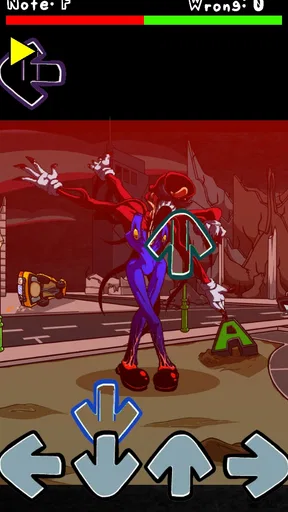
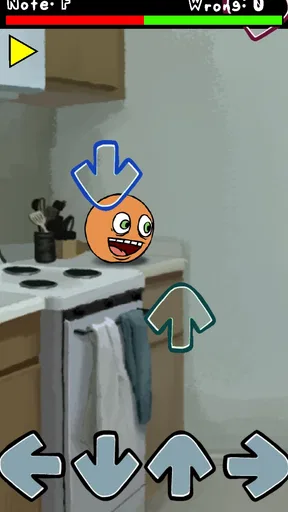
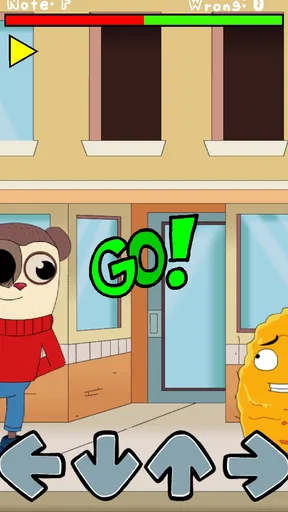
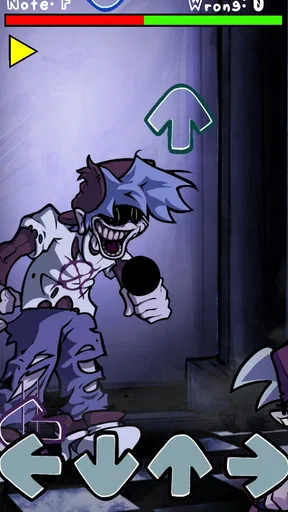
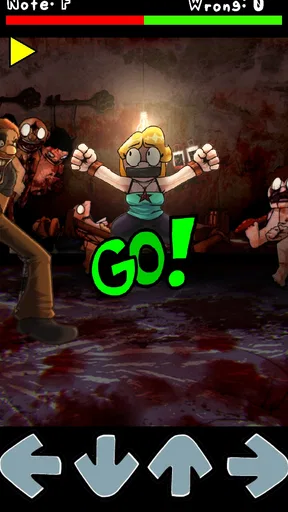
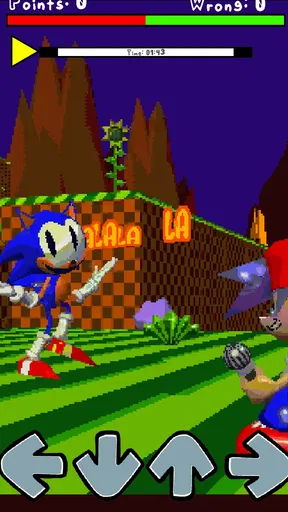
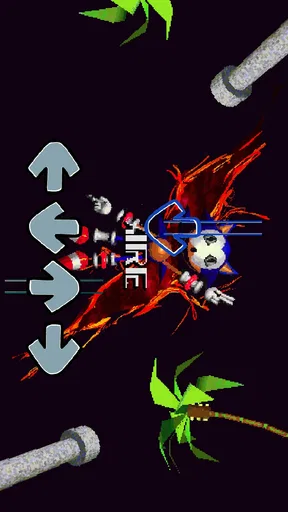
Our Review of Battle Night Funkin: Music Mod
 Analysis by Appyee
I went into Battle Night Funkin: Music Mod expecting a quick rhythm game built around familiar Friday-night music battles, and that is exactly where its appeal starts. The basic idea is easy to understand: listen for the musical cues, respond at the right moment, and try to keep the performance going through each encounter. It is a free music game from Sky_Games, aimed at Teen players, and its “Friday with some mods” identity gives it a clear place among mobile rhythm titles.
What kept me playing was not a complicated story or a huge collection of systems. It was the immediate loop. I begin a song, watch and listen for the next input, receive instant feedback when my timing is right or wrong, and then decide whether the result is good enough to accept or worth trying again. That quick reset is important because a failed attempt rarely feels like the end of the experience. It feels like a prompt to adjust my timing and take another run.
The game is currently listed as version 64.01 and works on Android 7.1 or later. It has passed the early curiosity stage as well, with more than one hundred thousand installs and an average score of 3.9 from roughly a thousand ratings. Those figures suggest a modest but established audience rather than a brand-new experiment. I would describe it as a convenient pick for short bursts of rhythm play, especially if you enjoy the Friday Night Funkin’ style and do not need a large, highly polished console-like production.
How the first action sets up the whole experience
The first useful thing to understand is that the opening action is not about learning a long list of controls. It is about finding the relationship between the music and the on-screen prompts. I prefer to start with a relaxed attempt rather than immediately chasing a perfect result. That first run tells me how quickly the cues arrive, how much visual attention the chart demands, and whether the audio timing feels natural on the particular phone I am using.
That approach matters because rhythm games can feel very different from one device to another. A screen with a comfortable touch response makes the opening exchange feel inviting, while a cramped layout or distracting notifications can turn the same song into unnecessary work. I recommend playing with the phone held steadily and keeping the display free from interruptions. Even when the game itself is straightforward, rhythm accuracy depends on consistency more than on frantic movement.
The Friday battle framing gives the first action a little more personality than a plain score-based music app. I am not simply tapping through an abstract exercise; I am responding to an opponent and trying to maintain the performance. That context makes each successful sequence feel like progress in a contest. It also explains why the game is more enjoyable when I pay attention to the musical exchange instead of treating the prompts as random symbols.
New players may be tempted to stare only at the lower part of the display where the inputs appear. I found that listening is just as important. The visual cues tell me what to do, but the beat helps me anticipate the next moment. Once I start using both, the game becomes less like reacting to isolated icons and more like following a repeating phrase. That is one of the most useful habits to develop during the first few sessions.
There is also a practical reason to avoid playing at maximum speed immediately: early mistakes can hide the real source of the problem. If I miss because I am looking away, pressing too late, or losing the beat, the correction is different in each case. A calm first attempt helps separate those issues. For a casual player, this makes the game easier to approach without turning the opening into a technical lesson.
Why the feedback rhythm matters more than the premise
The central pleasure comes from the short gap between an action and its result. I make an input, the game responds, and I immediately know whether my timing helped or hurt the performance. Good rhythm games make that exchange feel readable, and this one works best when I concentrate on maintaining a steady pattern instead of reacting emotionally to every mistake.
That feedback creates a useful tension. A correct sequence encourages me to stay focused, but one missed cue can make me rush the next response. The smartest adjustment is usually to return to the beat rather than trying to compensate with faster taps. In practice, I get better results when I treat a mistake as a temporary break in timing, not as a reason to panic through the rest of the song.
The music category is doing real work here. The game would lose much of its identity if the inputs were disconnected from the soundtrack. The Friday-inspired presentation gives the action a recognizable mood, while the mod-focused angle suggests that the attraction is in seeing a familiar formula presented through altered encounters. I would not choose it as a replacement for a full music player or a broad rhythm-training tool; its purpose is interactive performance, not passive listening or formal practice.
One small but important tip is to use the audio as a timing anchor even when the screen seems obvious. Visual anticipation can be misleading, especially during a dense passage. I find that listening for the pulse keeps my hands from moving too early. Conversely, if the sound feels difficult to follow, lowering other distractions around me is more useful than simply repeating the same failed attempt without changing anything.
Another useful habit is to watch the pattern across several inputs rather than judging every cue by itself. A sequence often has a shape: a short run, a pause, and then another exchange. Recognizing that shape lets me prepare my attention before the next group arrives. This is not a hidden mode or a special feature; it is a way of reading the game that makes the existing rhythm more manageable.
The limitation is that the feedback can only be satisfying when the controls and timing feel dependable on my device. Touch rhythm games are less forgiving than physical buttons, and players who demand extremely precise competitive input may find the experience less comfortable than a dedicated rhythm game with a more refined control system. For casual sessions, that trade-off is acceptable. For serious score chasing, it becomes a larger consideration.
What makes a successful run feel rewarding
The reward is mainly the feeling of holding a difficult musical exchange together. Completing a section without losing control gives me a clear sense of improvement, even when the game does not need elaborate progression systems to make the attempt worthwhile. The immediate payoff is personal: I saw the pattern, matched the timing, and kept the performance alive.
That kind of reward suits short mobile play. I can open the game with the intention of making one attempt, finish with a result that almost works, and decide to try again because the next improvement feels close. It is a different motivation from collecting items or building a character. Here, the reward is tied directly to execution, which makes every successful replay meaningful rather than merely repetitive.
I also like that the game can serve different levels of commitment. Someone unfamiliar with rhythm games can treat it as a light musical challenge, while a more experienced player can focus on cleaner timing and better consistency. The same song can therefore have two roles: a quick distraction when I have a few spare minutes and a repeated practice target when I want to improve.
A realistic everyday scenario would be a short break between tasks. I might have ten minutes, no interest in starting a long adventure, and enough concentration for one or two focused attempts. This game fits that moment because the action begins quickly and the result arrives at the end of the run. If I fail, I can reset without having to reconstruct a complicated plan or remember a large amount of story information.
Still, the reward is not equally strong for everyone. If you prefer music games with extensive song libraries, deep customization, online competition, or a strong progression map, this may feel too narrow. The appeal depends on enjoying the battle format itself. Players who want a broad catalog of genres or a more conventional arcade structure may be better served by a larger rhythm platform, even if it feels less focused.
The Teen content rating is also worth considering before handing the game to younger players. It is not presented as a children’s title, so families should make their own decision about whether the tone and musical battle presentation fit the intended player. For older teens and adults who already enjoy this style, the rating should not be surprising, but it does place the game outside the simplest family-game category.
Why the reset keeps another session tempting
The reset is the point where the design either succeeds or becomes frustrating. Here, restarting makes sense because the failure is usually easy to understand: I lost the beat, missed a response, or let a difficult sequence break my concentration. A new attempt gives me a specific adjustment to test. That is much more motivating than replaying without knowing what went wrong.
I recommend changing only one thing between attempts. If I alter my grip, volume, attention, and timing all at once, I cannot tell which change helped. A better workflow is to identify the problem, replay the same challenge, and focus on that single correction. For example, I may listen more closely during a fast phrase or stop rushing after an early mistake. This turns repetition into useful practice rather than mindless retrying.
The reset also makes the game suitable for players who dislike long commitments. There is no need to reserve an evening for it. I can stop after a successful run or leave after a failed one and return later without losing the basic understanding of how to play. That flexibility is one of its strongest mobile qualities, especially compared with rhythm games that surround each song with lengthy menus, upgrades, or story scenes.
On the other hand, quick retries can expose the limits of a compact game. If the available encounters do not continue to surprise me, repetition may eventually feel more like maintenance than discovery. The game’s strongest period is likely when I am still learning its patterns and improving my timing. Once I have exhausted that personal learning curve, someone seeking constant new content may start wishing for a larger selection or more varied modes.
Another practical question is whether the game suits silent play. I would not choose it when I need to keep my phone muted, because sound is central to reading the rhythm effectively. Visual cues remain important, but the experience loses some of its character and precision without audio. It is better suited to a quiet room, a private break, or a setting where I can listen without disturbing anyone nearby.
The free price lowers the barrier to trying it, which is helpful for curious players who already like Friday-style rhythm battles. It also means I can test the core loop without making a purchase decision first. I would still approach it with the right expectations: free access makes experimentation easy, but it does not automatically make the game a substitute for a larger premium rhythm title with more elaborate presentation.
Who should choose it over a usual rhythm alternative
I see Battle Night Funkin: Music Mod as a focused option for someone who wants quick, characterful rhythm battles rather than a general-purpose music game. Its strongest use case is a player who enjoys the recognizable Friday format, likes replaying a challenge to improve timing, and values a short path from opening the app to making the first input.
Compared with a music streaming service, it offers interaction instead of passive listening. Compared with a piano or beat-training app, it is more playful and battle-oriented rather than instructional. Compared with a large arcade rhythm game, it appears more approachable and less demanding in terms of long-term commitment, though that simplicity may also mean less variety for experienced players.
I would recommend trying it if your favorite part of rhythm games is the moment-to-moment exchange: cue, response, feedback, and another attempt. I would skip it if your priority is a huge licensed soundtrack, competitive rankings, sophisticated accessibility options, or a story that carries the experience between songs. Those are not minor preferences; they change what makes a rhythm game satisfying, and this title is built around the performance loop itself.
Device compatibility is reasonably broad because Android 7.1 is enough to run the current version, but compatibility alone does not guarantee an ideal session. I would check how comfortable the controls feel on your screen during the first few plays. A larger display may make patterns easier to read, while an older or less responsive phone could make precise moments more tiring. That is a reason to evaluate the actual touch experience rather than judging the game only by its genre.
The audience size gives me some confidence that the concept has found players, while the 3.9 average suggests a mixed but generally workable reception. I would not treat that score as a final verdict. Rhythm games are unusually sensitive to personal expectations: a casual player may enjoy the quick battles, while a demanding specialist may notice every limitation in timing, variety, or presentation. The right question is whether its compact loop matches the way you want to play.
My verdict on the action-feedback-reward-reset loop
After spending time with it, I think the game’s identity is clearest when I stop looking for a large collection of extras and focus on the simple cycle. I begin with a musical exchange, respond to the cues, receive immediate confirmation, enjoy the satisfaction of a clean passage, and restart when one mistake gives me a reason to improve. That chain is easy to grasp, but it can remain engaging because each replay asks for slightly better attention.
The best sessions are the ones where the music, visual prompts, and touch responses line up well enough for me to feel involved rather than merely busy. The weakest sessions are those where I want more variety or more advanced competition than this focused format can provide. That balance is why I would recommend it selectively instead of presenting it as the definitive mobile rhythm game.
For a free Teen-rated music game from Sky_Games, it offers a clear reason to install it: quick Friday-style battles that reward timing and make retries feel purposeful. I would suggest it to fans of modded rhythm experiences and to newcomers who want an uncomplicated way to test the genre. I would point dedicated rhythm-game players toward a broader alternative if they need extensive content or tournament-level precision.
My final advice is to give it a fair trial with sound enabled, a stable grip, and enough attention for one complete attempt. Do not judge the first miss too harshly; use it to identify the timing problem, then restart with one deliberate adjustment. If that process feels satisfying, the game has probably found its audience in you. If the repetition feels empty after a few tries, no amount of forcing the loop will change the fact that another kind of music game would suit you better.
Verdict
Strengths of Battle Night Funkin: Music Mod
- Simple tap controls make it easy for newcomers to start playing.
- The music-focused gameplay offers a satisfying rhythm challenge.
- Short song sessions work well for quick mobile gaming breaks.
- Bright character designs give the game a lively visual style.
- Different tracks can help keep the experience from feeling repetitive.
Limitations of Battle Night Funkin: Music Mod
- Timing can feel inconsistent on some devices or during demanding sections.
- The game may become repetitive if you play for long sessions.
- Some content may require progress or rewards before it becomes available.
- Background effects can make note patterns harder to read at times.
- Ads or optional purchases may interrupt the overall gameplay flow.
Similar Picks in This Category
View All
Tiles Hop Music & Ball Game
AMANOTES PTE. LTD.4.3

Magic Tiles 3™ - Piano Game
AMANOTES PTE. LTD.4.6

Real Piano
Bilkon3.7

Piano Game: Classic Music Song
Dream Tiles Piano Game Studio4.0

Smash Colors: Music Ball Rush
BADSNOWBALL HONGKONG LIMITED4.2

Piano Music Go-EDM Piano Games
Joy Journey Music Games4.5
Frequently Asked Questions
What is Battle Night Funkin: Music Mod?
Battle Night Funkin: Music Mod is a rhythm-based music game inspired by the popular Friday Night Funkin’ style. Players follow on-screen arrows and tap them in time with the beat while facing different opponents. The mod focuses on musical battles, colorful characters, and progressively more demanding tracks, making timing, concentration, and quick reactions important throughout each performance.
How do you play Battle Night Funkin: Music Mod?
Gameplay is based on matching incoming arrows with the correct controls when they reach the target area. Accurate taps increase your score and help maintain the performance bar, while missed notes can cause it to drop. Songs generally become faster and more complex as you advance, so learning each track’s rhythm and practicing difficult sections are essential for improving your results.
Can Battle Night Funkin: Music Mod be played offline?
Many rhythm games of this type allow the main songs and battles to be played without a constant internet connection, but availability can depend on the specific version installed. An internet connection may still be needed for downloading the game, advertisements, updates, or additional content. It is best to launch the app once online and check which features remain accessible offline.
Is Battle Night Funkin: Music Mod suitable for children?
The game is generally easy to understand because its controls are based on simple taps and visual prompts. However, parents should review the app’s age rating, advertising, music, and any external links before allowing younger children to play. Difficulty can also become challenging, and repeated attempts may be frustrating for players who are not accustomed to fast-paced rhythm games.
Does Battle Night Funkin: Music Mod include ads or in-app purchases?
The monetization setup can vary according to the edition, developer, device, and region. Some versions may display advertisements between songs or after failed attempts, while others may offer optional purchases or additional content. Before downloading, check the official store listing for current information about ads, permissions, and in-app purchases, since these details can change after updates.
Play our best games!


